Unfulfilled Promise of Self-Determination in IIOJK
The Indian illegally occupied Jammu and Kashmir controversy is one of the unresolved cases on the United Nations agenda and one of the main concerns in the politics and security domain of South Asia. The people of IIOJK actually celebrate the Right to Self-Determination Day every 5th of January to mark the United Nations Commission for India and Pakistan (UNCIP) resolution of 5 January 1949. This resolution reiterated the fact that people of Jammu and Kashmir had to decide their future by free and fair plebiscite under the supervision of the UN. Seventy-six years later, the ongoing denial of this right is not only indicative of the inability of international commitments but also an indication of the ongoing suffering of the Kashmiri people.
Kashmir had a complicated and extended politics before the coming of the British colonial rule in the Indian subcontinent, where regional forces and dynasties influenced the region. The Treaty of Amritsar of 1846 was a turning point for the British as it sold Kashmir to Gulab Singh, a Dogra, and introduced its rule in a majority-Muslim state. This system made political marginality, economic exploitation, and social alienation of the Kashmir majority (Muslims) institutional and gave way to the future conflict. A princely state of the British Raj (Kashmir) continued to be ruled by Dogra rulers, and the popular opposition to autocratic rule became increasing. In the 1930s and 1940s, political rights and representation movements grew stronger, and this was representative of anti-colonial feelings in the subcontinent at large. The status of the princely states, such as Jammu and Kashmir, which had no resolution as British withdrawal was imminent in 1947, was a burning point in the partitioning of India. In August 1947, British India was partitioned, resulting in the formation of Pakistan and India, whose bases were more or less founded on the principle of religious demography. The Maharaja was hesitant to grant Jammu and Kashmir its independence, thus preventing a decision that would have been rather easy, considering that there was an overwhelming majority of Muslims and it had a geographic proximity with Pakistan. Popular unrest against the Dogra rule and political uncertainty increased at a high rate. People started their struggle for freedom against the Maharaja in October 1947, and the Maharaja requested Indian military support. India argued that the Maharaja had signed an Instrument of Accession, a move that Pakistan disagreed with, saying that any accession was not legitimate without the authorization of the Kashmiri people.
The consequent military conflict caused the first war between Pakistan and India concerning Kashmir, whereby India petitioned the United Nations in January 1948 over the matter. The dispute was identified as an international one by the United Nations, and the United Nations Commission of India and Pakistan (UNCIP) was formed. The UN came up with a clear framework for conflict resolution through a series of resolutions. At the heart of this plan was the decision made on 5 January 1949, which made it clear that the people of Jammu and Kashmir had the right to decide their own fate by a free and fair plebiscite under UN supervision. The resolution demanded a cease-fire on one side, withdrawal of forces on the other side, and establishment of a situation that would facilitate a fair plebiscite. Pakistan continuously showed its readiness to follow the procedure set out by the UN. In his works, famous civil servant and intellectual Qudratullah Shahab describes how in a detailed plan submitted by Pakistan in the United Nations, there was a plan of withdrawal of forces, and practical completion of the mechanism of plebiscite was outlined. Shahab says that Pakistan was flexible and invested in the process of the UN, but India did not follow the agreed framework in good faith. India slowly took up a stand that went against the UN resolutions in spite of international commitments made respectively. India blocked the plebiscite process by stalling demilitarization, denying international mediation, and then declaring that Kashmir was an internal issue.
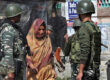
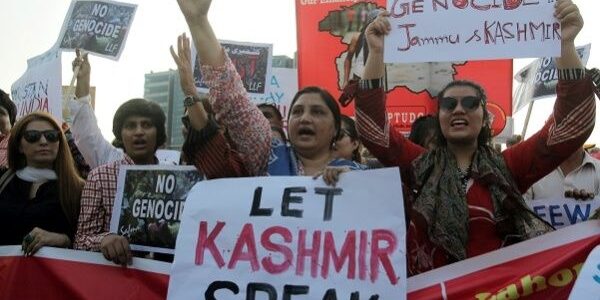
Gradually, India strengthened its grip on the territory and ignored the binding of international law. Pakistan continues to argue that India is acting in blatant disregard of UN Security Council resolutions and the principle of self-determination, which is the main focus of the major principles of the UN Charter. The Line of Control that came into being following the 1949 ceasefire was never to be a permanent boundary, though Indian policy has attempted to normalize the status quo rather than actually resolving the underlying dispute. The political unrest in IIOJK has not been fixed, and this has been accompanied by systematic human rights violations in the Indian-occupied territory. IIOJK has been one of the highly militarized places in the world over the decades. International human rights organizations have reported many cases of extrajudicial killings, enforced disappearances, arbitrary arrests, torture, and denial of freedom of expression and assembly. The condition has also been worsening in recent years, especially after the unilateral measures of August 2019, when India removed Jammu and Kashmir of its special status. These actions were coupled with extended lockdowns, communication blackouts, and mass arrests, which had a dire impact on the lives of the civilians. These steps are perceived by Pakistan as trying to change the demographic and political nature of the area, and this is a serious threat to the Kashmiri identity. The further silencing of Kashmiri voices, the deprivation of political rights, and the loss of cultural and religious identity indicate that the situation is quite dire.
Kashmiri struggle is not a territorial struggle but a struggle of dignity and identity, and the fundamental right of choice of which political future they want. January 5 is a reminder of a promise that was not kept internationally. Pakistan constantly requests the United Nations and the rest of the international community to cease issuing concerns and initiate constructive action to guarantee that the UN resolutions on Kashmir are put into practice. Lacking action and speaking out could allow oppression to be justified and undermine the effectiveness of the international norms concerning human rights and self-determination. Kashmir and the maintenance of the Kashmir identity are at stake. The South Asian region cannot have a just and lasting peace until the Kashmir dispute is resolved in line with the desires of its people. The global community has both a moral and legal obligation to keep its promises and enforce an amicable and lawful solution.
About the author: The article is written by Abdullah Shah, a research fellow at YFK
- The Abrogation of Article 370 and the Right to Self-Determination Under InternationalLaw: A Critical Legal and Political Analysis. - September 22, 2026
- Civil Liberties in Kashmir - September 21, 2026
- Journalism Under Siege: The Erosion of Press Freedom in IIOJK - September 17, 2026