Beyond Kunan Poshpora: The Ongoing Weaponization of Women in IIOJK
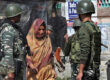
In the history of Illegally Occupied Jammu & Kashmir, the incident of Kunan Poshpora (1991) gained momentum when Indian forces held their search operation in the villages of Kunan and Poshpora in Handwara, where they allegedly killed men and raped women. According to various reports, the number of victims was estimated from 23 to over 100, but in response to these serious crimes, investigations were postponed, incomplete, and resulted in the denial of victim’s justice. This incident illustrates the deadliest examples of sexual violence, militarisation, and repression where women were used as a weapon in conflict zones (Saadat Amin & Rekha Rani, 2025; Butt & Rather, 2016).
Dating back from the Dogra rule to the insurgency period of the 1990s, women have suffered significant losses, including their husbands, sons, and their homes. Even during the 21st century, women were affected by human rights violations such as sexual abuses, disappearances, and mass killings (Saadat Amin & Rekha Rani, 2025). Moreover, MSF (Doctors without Borders) and the Institute of Mental Health and Neurosciences (IMHANS) studies suggest that such events caused fear, silence, and psychological consequences. The survey reveals that about half of the women in IIOJK suffer from depression, 36% have anxiety disorders, and many more have Post-traumatic Stress Disorder (PTSD), caused by prolonged militarisation and repression (Wani, 2025).
Beyond mental health issues, women also faced broader social challenges like restrictions on mobility, education, and livelihood opportunities. In this way, sexual violence served as a means for social control where homes turned into sites of fear. Interviews with some Kashmiri people show that tragic events like Kunan Poshpora forced some families to discourage women from getting education and work. As noted in Al Jazeera, women sometimes faced social marginalization rather than support, leaving them isolated alongside military presence (Al Jazeera, 2019; Sarkar, 2016).
Kunan Poshpora also reflects the story of bravery and courage despite sufferings. As men are killed and imprisoned, their half-widows reflect both trauma and remarkable resilience. Thus, survivors have changed their hardships into public activism; highlights the resistance of Kashmiri women (Butt & Rather, 2016). According to some scholars, women in IIOJK are prime examples of resilience through which they continued their education and activism despite unstable circumstances. Cultural and traditional practices, including oral traditions, stories, and songs like “wanwun”_ a cultural song performed by women to express their grief is also being a part of resilience. Through these actions, events like Kunan Poshpora remained in public narratives (Saadat Amin & Rekha Rani, 2025).
According to Sarkar (2016), in response to such tragic crimes, some women have taken legal and political actions in 2013 which urged India’s Supreme Court to restart investigations into that case. While some scholars demonstrate this step as “resistance means existence”, speaking is a way for survival (Dabla, 2025). Additionally, some publications of the book “Do You Remember Kunan Poshpora” challenged official denial through political stances including women’s writings, activism, and public engagements (Batool et al., 2016).
Today, the story of Kunan Poshpora remains a significant event. After the revocation of Article 370 in 2019 by the Indian government, the constitutional status of IIOJK was reorganized under federal control. Though it was an administrative move but it causes serious implications for civilians. The tensions further escalated when Indian government imposed additional restrictions on public movements, blackouts, and even suppressed freedom and rights which harmed IIOJK atmosphere. Moreover, long-term banned on internet services affected women’s access to education, healthcare facilities, limiting employment benefits and increasing social anxiety among young girls (Wani, 2025).
However, in contemporary IIOJK, the dark reality of the Kunan Poshpora incident continues to change the social behaviour of Kashmiri people in their everyday life. As Ifra Butt and Natasha Rather claim, the emergence of armed surveillance, restrictions, and sexual abuses has created a sense of insecurity among both urban and rural women. Though, women in IIOJK struggle to change this reality through collective efforts. Consequently, women in IIOJK become more prominent figures than before and stand as witnesses of injustice and voices for justice and dignity.
In conclusion, the Kashmir conflict can not be fully recognized without understanding its gender-based dynamics. Similarly, Kunan Poshpora is not just a past incident, but it also presents the status of women in IIOJK ongoing environment. Women are survivors and change makers rather than just weapons of war crimes. This unresolved tragedy influence that how women can interpret the present and future. To enduring stability and peace in the region, it is necessary to address the persisting challenges, strengthen accountability, give serious attention to past and present crimes, and provide justice and rights for women and other victims.
By
Malaika khawer, Research Fellow at YFK and a student of IR at the University of Poonch Rawalakot, AJK.
- Constitutional and political developments in Kashmir after 2019 and their consequences - October 26, 2026
- The Abrogation of Article 370 and the Right to Self-Determination Under InternationalLaw: A Critical Legal and Political Analysis. - September 22, 2026
- Civil Liberties in Kashmir - September 21, 2026