THE IMPACT OF ARBITRARY DETENTIONS AND DRACONIAN LAWS (PSA AND UAPA) IN IIOJK.
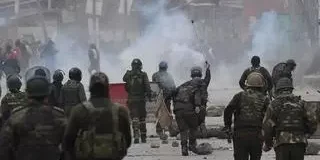
The people of IIOJK have been subjected to the worst kind of human rights abuses since the partition of the subcontinent in 1947. For up to 7+ decades, Indian Illegally Occupied Jammu and Kashmir (IIOJK) has remained one of the most militarized regions in the world. Besides the visible presence of troops, a quieter mechanism of control operates through arbitrary detentions and draconian legal frameworks. Laws such as the Public Safety Act (PSA) and the Unlawful Activities (prevention) Act (UAPA) have increasingly been used against innocent Kashmiris to suppress dissent, journalists, and political opponents.
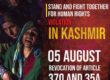
The Public Safety Act, promulgated in 1978, empowers a state government to detain a person without trial for two years under the pretext of maintenance of public order and state security. The detainees are not informed of the reasons for their arrest, and they are kept in custody for a much longer period of time than mandated by the act. Thousands of people have been detained over the years under the act. Similarly, the UAPA ordinance was passed by the Indian government. It has since been enacted as an anti-terrorism law (Ministry of Home Affairs). Following the revocation of Article 370 in 2019, the application of these laws is further augmented. What makes these laws alarming is that individuals are not detained for crimes committed, but for what the authorities think they might commit.
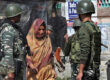
The extensive use of PSA and UAPA in IIOJK reflects the erosion of civil liberties in IIOJK. Detainees are frequently moved to prisons outside the region, making legal recourse extremely difficult. Detainees are not allowed to inform their families, while bail remains nearly impossible under the stern provisions of UAPA. These arbitrary detentions are used as tools of suppression. According to the reports in Indian Occupied Jammu and Kashmir (IIOJK), there are ongoing human rights abuses, especially against the Muslim majority. People face arbitrary arrests, extrajudicial killings, communication blackout,s and disappearances. India’s revocation of Article 370 in August 2019, civil liberties were already limited, and the condition worsened dramatically after the April 22, 2025, Phalgham incident. The Indian government quickly blamed Pakistan for the April 2025 attack without providing solid evidence. According to the report before April 2022, many people were detained for peaceful expressions and political views, especially under UAPA and PSA. After the Pahalgham incident Indian government increased the mass arrests and use of Fake encounters. The decisive escalation followed the Red Fort blast in November 2025 (The Guardian), for which the authorities launched a sweeping crackdown across IIOJK. Mass arrests were carried out, including doctors, students, and professionals with no connection to violence. Between September and December 2025, this period is also seen as the emergence of “white collar” terrorism used as a tool to systematically pressure Kashmiris through legal, administrative, and economic means (India Today). This reflected a deliberate strategy to suppress political expression and prevent any challenge to state authority. According to the KIIR Report on Human Rights, APHC, the All Parties Huriyat Conference condemned the Indian Home Minister Amit Shah’s statement on Kashmir as Indian forces launched an arrest spree in different parts ofthe Kashmir Valley to detain youth and intimidate freedom and peace-loving Kashmiris in Indian Illegally occupied Jammu and Kashmir (Kashmir Media Service).
Despite repeated concerns raised by international human rights organizations and UN bodies, meaningful liability remains absent. Besides human rights violations, the arbitrary detention and misuse of draconian laws have also led to societal consequences. Because the authorities are using arbitrary restrictions to create a climate of fear in Jammu and Kashmir. Anyone daring to criticize the government or to stand up for human rights can face serious allegations weather clampdown on their rights to freedom of expression. The misuse of draconian laws such as the Public Safety Act (PSA) and the Unlawful Activities (Prevention) Act (UAPA) to carry out arbitrary detentions led to the suppression of independent voices, and the Indian authorities have nearly total control over information from Jammu and Kashmir. Arbitrary detentions in IIOJK stand in clear violation of International human rights legal standards, as the Universal Declaration of Human Rights (Article 9) International Covenant on Civil and Political Rights (ICCPR), which assures the right to liberty, freedom of expression, and fair trial.
Pakistan views with deep concern the latest reports highlighting the severe human rights abuses in Indian – Occupied Kashmir. India’s actions resulted in the arbitrary detentions of nearly 2800 individuals, including journalists, students, and human rights advocates. Instances of torcher denial of due legal process, and suppression of press freedom – including the blocking of 8,000 social media accounts (Dawn, 2025). Pakistan calls upon India to stop its coercive measures and to release all those arbitrarily detained in IIOJK. Pakistan emphasized its commitment to a peaceful resolution of the Jammu and Kashmir dispute in accordance with the United Nations security resolution council. Pakistan is always there to provide moral, political, and diplomatic support to the Kashmiri people in their just struggle against India’s Illegal occupation.
The strategic and continued use of arbitrary detention under draconian laws such as the Public Safety Act (PSA) and the Unlawful Activities (Prevention) Act in IIOJK by Indian Authorities represents a grave assault on fundamental human rights and the rule of Law. By imposing these Laws authorities rather than ensuring security, take such measures as a tool of political suppression, to suppress dissent, leading to numerous incidents of extrajudicial killings and targeted violence against civil liberties. Journalists, students, political workers, and ordinary civilians are being targeted and detained without trial for up to two years, while families are left in prolonged uncertainty and psychological trauma. Pakistan strongly condemned India’s actions and misuse of draconian laws as blatant violations of humanitarian law. These measures created instability in the region. A sustainable peace in South Asia demands transparency, accountability, the repealof repressive laws, and the realization of the Kashmiri people’s right to self-determination in accordance with international law, rather than Indian authorities’ coercion and incarceration against the people of Indian Illegally Occupied Jammu and Kashmir (IIOJK).
About the Author: Noor-ul-Huda, Research Fellow at YFK
and a student of International Relations at the University of Poonch Rawalakot, AJK.
- The Abrogation of Article 370 and the Right to Self-Determination Under InternationalLaw: A Critical Legal and Political Analysis. - September 22, 2026
- Civil Liberties in Kashmir - September 21, 2026
- Journalism Under Siege: The Erosion of Press Freedom in IIOJK - September 17, 2026