Operation Bunyan Marsoos: A Chapter of National Resolve and Collective Resilience
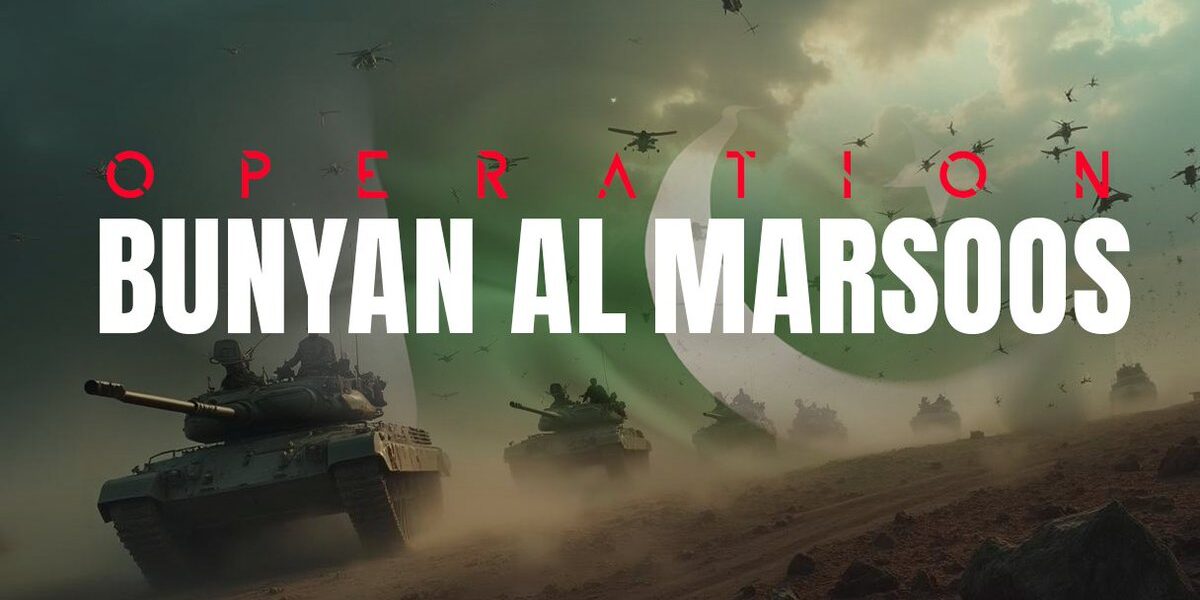
On May 10, 2025, a date that has since become firmly embedded in Pakistan’s collective national memory, the armed forces launched Operation Bunyan Marsoos at dawn. The operation was presented as a decisive and carefully calibrated response to what was described as external provocation, reflecting both strategic calculation and a sense of national resolve. Over time, this moment has come to symbolize unity, discipline, and resilience, and is now recalled across the country as a defining chapter in recent history. The title “Bunyan Marsoos,” drawn from a Quranic expression describing a solid and reinforced structure, was widely interpreted as a metaphor for cohesion and steadfastness, representing the alignment between the state, its institutions, and its people in the face of pressure. To understand the significance attributed to this operation, it is necessary to revisit the chain of events that preceded it. On April 22, 2025, a major incident took place in Pahalgam in Indian-occupied Kashmir, where a terrorist attack resulted in the loss of 26 civilian lives, most of whom were reported to be Hindu tourists. The Government of Pakistan strongly condemned the incident and publicly called for an independent and impartial international investigation, while firmly denying any involvement and reiterating its consistent position on the need for peace and stability in the region.
In the days that followed, tensions escalated significantly. The Indian government initiated what it termed Operation Sindoor on May 7, 2025, carrying out missile and drone strikes on multiple locations across Pakistan and Azad Kashmir. These strikes were stated to be directed at alleged militant infrastructure; however, Pakistani official sources reported civilian casualties, including women and children, with an initial toll of 31 lives. Several areas, including key airbase regions such as Nur Khan, Murid, and Shorkot, were reported to have come under attack, marking a serious escalation in cross-border hostilities. This development was framed in Pakistan as a direct violation of sovereignty. National leadership, including Prime Minister Shehbaz Sharif and the military command under General Syed Asim Munir, was described as maintaining a posture of restraint while preparing a measured response. During this period, heightened rhetoric and media exchanges between the two sides further intensified public attention, while Pakistan’s official position emphasized both deterrence and defense.
At dawn on May 10, Pakistan launched its response in the form of coordinated strikes targeting multiple military installations across the border. The operation reportedly involved precision-guided missile systems, including the Fatah series, along with drone capabilities and supporting assets. According to official accounts, these actions were executed with precision and coordination, reflecting an integrated operational approach. Reports also indicated the use of electronic warfare and cyber-related capabilities aimed at disrupting adversary communication and command structures, while Pakistani authorities maintained that their own aerial assets remained fully intact. From within Pakistan, the atmosphere during these developments was described as highly charged, with widespread public attention focused on official briefings and national media coverage. The operation was framed not as an act of revenge, but as a defensive measure aligned with national duty and strategic necessity. The expression “Bunyan Marsoos” became a recurring reference point in public discourse, symbolizing the idea of a unified and unbreakable national front. Pakistani official narratives also rejected opposing claims regarding the effectiveness of defensive interceptions and damage limitation, instead asserting operational success based on internal assessments.
Alongside the strategic dimension, the human and social response within Pakistan was significant. Public spaces, media platforms, and institutions reflected a strong sense of solidarity, with citizens expressing support through various cultural and digital means. Families followed official updates closely, while expressions of national unity were visible across different segments of society. The narrative that emerged emphasized not only military preparedness but also collective resolve. At the same time, the conflict period was acknowledged to have resulted in loss of life on both sides, with Pakistani accounts also recognizing civilian casualties and expressing sorrow over the human cost of escalation. This aspect, while secondary in strategic discourse, remained part of the broader national reflection on the consequences of armed confrontation.
One account that circulated widely during this period included a message attributed to a young officer before deployment, expressing a sense of duty, unity, and faith in collective strength. Such expressions came to represent, in narrative terms, the spirit associated with the operation. In the year following these events, Operation Bunyan Marsoos has increasingly been remembered not only as a military episode but as a moment of national consolidation. It has been cited as an example of cohesion across different regions and communities within Pakistan, bringing together diverse linguistic, ethnic, and cultural groups under a shared national framework.
The aftermath also highlighted considerations of resilience, as economic and institutional systems adjusted to the short-term disruptions caused by heightened tensions. Public discourse emphasized recovery and continuity, while reaffirming the importance of national self-reliance and preparedness. Diplomatically, the episode contributed to renewed international attention on regional stability and the longstanding Kashmir dispute, reinforcing Pakistan’s position that sustainable peace in South Asia is closely tied to addressing underlying political issues in accordance with the aspirations of the Kashmiri people. Within Pakistan’s own internal discourse, critical voices have at times pointed to the risks inherent in escalation between nuclear-armed states. However, the dominant narrative continues to frame the response as a necessary act of defense within the context of repeated provocations, emphasizing that restraint and strength must exist in balance to preserve peace.
May 10 is increasingly referenced in public memory as part of a broader historical continuum of national experiences marked by conflict, sacrifice, and resilience. It is remembered in households, educational spaces, and public discussions as a moment that reinforced a sense of collective identity and reaffirmed the perceived role of national institutions in safeguarding sovereignty and stability.

- Journalism Under Siege: The Erosion of Press Freedom in IIOJK - September 17, 2026
- Bo Vegas bonuses and promotions - September 10, 2026
- Comprehending the Appeal of Wow Las Vega Gambling Establishment Online - September 8, 2026