Civil Liberties in Kashmir
Across the world, conflict zones present a difficult paradox: the state claims extraordinary powers to restore order, yet these very powers often erode the freedoms they claim to protect. Kashmir offers a compelling case study of distinction. For over seven decades, Kashmir has remained at the centre of a bitter territorial dispute, and the consequences for ordinary civilians have been profound; understanding how liberties have fared in this environment requires looking beyond headlines and examining the structural forces that shape everyday life.
Civil liberties are basic rights that protect individuals from excessive state control while ensuring personal freedom, justice, and equality. These liberties commonly face adverse challenges due to security concerns and unstable governance in conflict-affected regions. As one of the most prominent examples, Indian Occupied Kashmir is the region where civil liberties have remained a pressing concern for decades. This analysis examines the condition of civil liberties in Kashmir, specifically following the political developments of 2019, drawing upon secondary data from academic articles and human rights reports to assess the restrictions on freedom of speech and access to information.
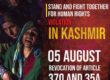
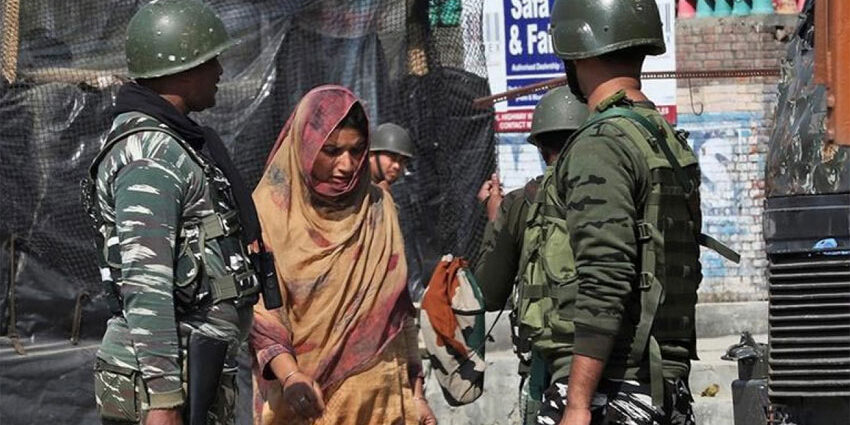
The origin of the Kashmir conflict can be traced back to 1947, during the partition of British India, when the region was divided and claimed by both states, India and Pakistan. Armed insurgency, wars, and continued tension shaped the political environment of Kashmir, and now, unfortunately, the region has been heavily militarized by the Indian occupational forces. Few laws, such as the Armed Forces Special Powers Act AFSPA and the Public Safety Act PSA grant powers to security forces, including arrest without warrant and detention without trial. The government also imposed prolonged Internet shutdowns curfew after 2019; these may have profoundly impacted healthcare facilities, business activities, and education, making it integral to understand this background when analyzing the current state of civil liberties in Kashmir.
Several critical dimensions of the situation have been found in the study. First, freedom of speech is restricted in IIOJK, where journalists face pressure and surveillance, social media activity is monitored, and individuals have been detained for their online expression. Second, IIOJK has experienced the longest Internet shutdowns in the world, particularly affecting their business activities, information access, and education. Third, there are restrictions imposed on movement and assembly, including curfews and security barricades. Fourth, laws such as the PSA allow detention without trial. Many political leaders, activists, and civilians have been detained for raising serious concerns about due process and the rule of law.
Another important finding is the restriction on freedom of expression and access to information; long-term Internet shutdowns and surveillance have been frequently used as security measures in the region. Existing literature supports the finding that these restrictions have long-term economic and social effects. It has been argued by scholars that they have weakened communication and disrupted healthcare too.
Several recommendations emerge from this analysis. The review and reform of security laws such as AFSPAN and PSA is one of the most integral recommendations; although these laws were introduced to deal with exceptional security situations, their prolonged use without sufficient safeguards has raised many challenges for human rights concerns. Hence, there is a need to revise these laws to ensure compliance with constitutional principles and international human rights standards. Clear guidelines should be established for preventing the abuse of authority, and detention without trial should be limited. Accountability is also very important to protect civil liberties. Courts should be granted the authority to review security actions and provide remedies in cases of rights violations.
Government should engage civil society groups, representatives, and local political leaders. Dialogues will help in building trust and addressing various concerns. Civil society organizations play a significant role in documenting conditions on the ground, supporting victims, and promoting dialogues and should be allowed by the government to operate freely and safely. A balance is required between security imperatives and basic rights of the people of Kashmir, ensuring that civil liberties are not sacrificed in the name of stability.
Ultimately, the situation in Kashmir reflects a broader global dilemma: how to reconcile security with liberty in regions marked by protracted conflict. History suggests that suppressing civil liberties does not eliminate dissent but merely drives it underground, creating deeper alienation and delaying genuine peace. The people of Indian Occupied Kashmir deserve nothing less than a future in which their freedoms are not treated as bargaining chips but as the foundation of lasting stability.
About the Author: This article is written by Bushra Aslam, Junior Research Fellow at Youth Forum for Kashmir (YFK).
- The Abrogation of Article 370 and the Right to Self-Determination Under InternationalLaw: A Critical Legal and Political Analysis. - September 22, 2026
- Civil Liberties in Kashmir - September 21, 2026
- Journalism Under Siege: The Erosion of Press Freedom in IIOJK - September 17, 2026