The daily military operation of Indian forces: psychological impact
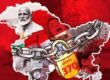
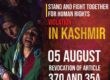
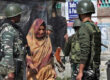
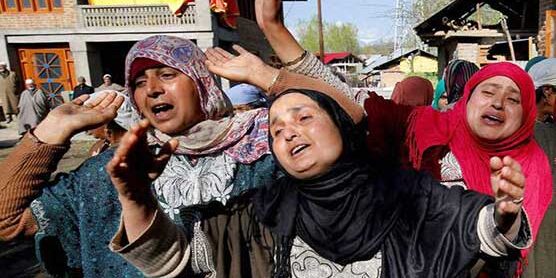
Throughout the centuries, Kashmir has held considerable geographical, historical, and strategic importance in South Asia. The region has endured successive phases of conflict, political uncertainty and military confrontation. Today, the people of Indian Illegally Occupied Jammu and Kashmir (IIOJK) continue to face serious human rights concerns, including allegations of excessive use of force, arbitrary detentions, restrictions on movement and prolonged security operations. Following the revocation of Article 370 in August 2019, India deployed approximately 50,000 additional troops to the region, adding to its already extensive military presence. Since then, concerns regarding increased militarisation and restrictions on fundamental freedoms have remained central to the Kashmir conflict. IIOJK is widely described as one of the world’s most heavily militarised regions, creating an environment of persistent insecurity for its civilian population. Such conditions have far-reaching psychological consequences, affecting the mental well-being, social relationships and everyday lives of ordinary Kashmiris.
The Kashmir Valley, a Muslim-majority region within Indian Illegally Occupied Jammu and Kashmir, provides a significant setting for examining the relationship between prolonged armed conflict and post-traumatic stress disorder (PTSD). Since the partition of British India in 1947, Kashmir has remained an unresolved conflict between India and Pakistan and an important issue on the international agenda. This has resulted in a prolonged geopolitical conflict characterised by territorial disagreements, military confrontations and political instability. In 1989, a freedom movement against Indian rule emerged in Kashmir, marking a significant escalation in the conflict. The subsequent period was characterised by serious human rights concerns, including allegations of extrajudicial killings, enforced disappearances, arbitrary detentions and sexual violence. The extensive use of security legislation and military operations has further raised concerns about civilian protection, accountability and fundamental freedoms.
The collective impact of decades of conflict and militarised governance has had devastating consequences for the Kashmiri population. Human rights organisations, including the Association of Parents of Disappeared Persons (APDP), have reported that approximately 8,000 to 10,000 people have disappeared since the beginning of the conflict in 1989, although these estimates remain disputed. Beyond physical casualties and disappearances, prolonged exposure to violence and insecurity has contributed to a significant mental health crisis. According to a 2015 study conducted by Médecins Sans Frontières (MSF), in collaboration with the University of Kashmir and the Institute of Mental Health and Neurosciences (IMHANS), nearly one in five adults in the Kashmir Valley exhibited symptoms of probable post-traumatic stress disorder. Separate research and reports have also highlighted the limited availability of mental health services and the difficulties faced by Kashmiris in accessing professional psychological treatment.
The impact of prolonged conflict on the mental well-being of Kashmiris is further established by the Kashmir Mental Health Survey. This large-scale population-based survey covered all ten districts of the Kashmir Valley and interviewed 5,519 adults. Its findings revealed that 45 per cent of adults experienced significant mental distress, 41 per cent showed symptoms of probable depression, 26 per cent showed symptoms of probable anxiety, and 19 per cent exhibited symptoms of probable PTSD (Housen et al., 2017).
The report further estimated that 41 per cent of the adult population in Kashmir, approximately 1.6 million people, exhibited symptoms of probable depression; 26 per cent, approximately one million people, showed symptoms of probable anxiety; and 19 per cent, approximately 771,000 people, exhibited symptoms of probable PTSD. The districts of Baramulla and Budgam reported the highest prevalence of these three conditions. Gender-based findings were equally concerning, with 37 per cent of adult males and 50 per cent of adult females showing symptoms of probable depression; 21 per cent of males and 36 per cent of females showing symptoms of probable anxiety; and 18 per cent of males and 22 per cent of females exhibiting symptoms of probable PTSD. Approximately 10 per cent of adults (415,000 people) showed symptoms of severe depression, while six per cent (248,000 people) met the survey’s criteria for severe PTSD. Suicidal ideation, measured through responses to the question, “In the past four weeks, how often have you had thoughts of killing yourself?”, was reported by 12 per cent of adults. Of those reporting suicidal thoughts, 94 per cent also exhibited symptoms of at least one of the three psychological disorders examined in the survey. An adult resident of the Kashmir Valley had experienced or witnessed an average of 7.7 traumatic events during their lifetime, including natural disasters and conflict-related incidents such as security crackdowns, raids and frisking. Approximately 99.2 per cent of adults reported experiencing or witnessing at least one traumatic event. The most common everyday difficulties included financial problems, poor health and unemployment. Common coping strategies included prayer, talking to family members or friends, social isolation and walking. The survey also found that approximately one in five men used tobacco as a coping mechanism. Around 11 per cent of adults reported using benzodiazepines, medicines commonly prescribed for anxiety and insomnia, and approximately 46 per cent of these individuals reported using them for more than a year. Major barriers to accessing mental health treatment included limited awareness of psychiatric services, financial constraints, geographical distance and inadequate healthcare infrastructure. Social stigma, discrimination and a lack of awareness further discouraged individuals from seeking professional assistance (Kashmir Mental Health Survey, 2015).
The findings present a clear picture of the psychological consequences of prolonged conflict and militarisation in Indian Illegally Occupied Jammu and Kashmir. The research demonstrates that mental distress, depression, anxiety, and PTSD are not isolated occurrences but widespread conditions affecting a substantial proportion of the population. With nearly the entire adult population reporting exposure to at least one traumatic event during their lifetime, the psychological impact of the conflict extends far beyond individual-level suffering. It affects families, social relationships, economic stability and the wider healthcare system. The continued presence of insecurity, political uncertainty and restrictions on civilian life further complicates the situation. Despite the scale of this crisis, stigma, financial difficulties and inadequate access to psychiatric services continue to prevent many individuals from receiving appropriate treatment. Addressing this situation requires not only improved mental healthcare facilities and greater public awareness as well as serious international attention to the underlying human rights and security conditions contributing to the psychological suffering of the Kashmiri population. A lasting and peaceful resolution of the Kashmir conflict, in accordance with the relevant United Nations Security Council resolutions and the right to self-determination of the Kashmiri people, remains essential to ensuring a future based on dignity, security, and lasting peace.
About the author: Kamran Achakzai is an International Relations student at International Islamic University. He has a strong interest in humanitarian law, politics, and social issues.
- The daily military operation of Indian forces: psychological impact - November 10, 2026
- Constitutional and political developments in Kashmir after 2019 and their consequences - October 26, 2026
- The Abrogation of Article 370 and the Right to Self-Determination Under InternationalLaw: A Critical Legal and Political Analysis. - September 22, 2026