Constitutional and political developments in Kashmir after 2019 and their consequences
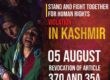
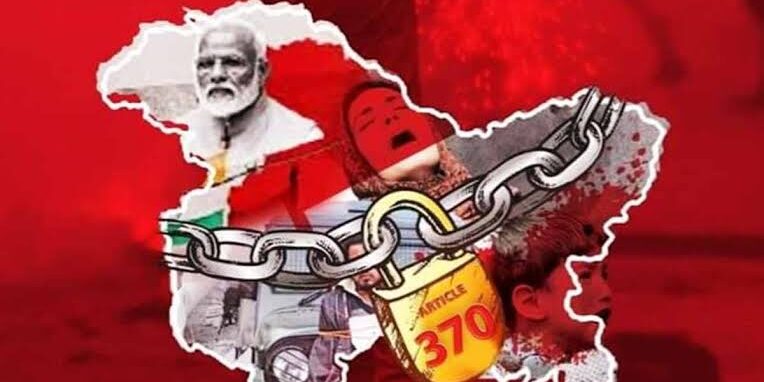
On 5 august 2019, Indian government made the most consequential change in constitution of India since its accession in 1947 by stripping away special autonomy of the region it had held under Article 370 which split the state into two federally governed union territories (Jammu and Kashmir). New Delhi has consistently described the move as an act of integration and said that it ended decades of separatism, corruption, gender and refugee discrimination while unlocking investment, tourism, and development. On the contrary, United Nations human right’s report said that a Muslim-majority region’s constitutional status, demographic character, and political voice were altered unilaterally, without its consent, and under a communications blackout and mass detentions.
IIOJK’s relationship with India was never a simple state union. Maharaja Hari Singh’s Instrument of Accession granted India control over defence, foreign affairs, and communications, while retaining the state’s authority to frame its own constitution. In 1949, the Indian Constituent Assembly debated a provision concerning Jammu and Kashmir, initially drafted as Article 306A. The provision limited the Indian central government’s authority to defence, external affairs, and communications, while other matters remained under the state’s authority pending a formal plebiscite. The provision was drafted chiefly by N. Gopalaswami Ayyangar and Sheikh Abdullah. It was subsequently incorporated as Article 370 into the Indian Constitution in 1950 under the category of “Temporary, Transitional and Special Provisions.” Article 370 restricted Parliament’s authority to legislate on other matters without the state government’s approval and provided the constitutional basis for Article 35A, which protected permanent residency, property ownership, and government employment rights for local residents.
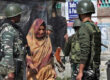
Using a presidential order, the government replaced the state governor’s agreement with an elected state government; “Manoj Sehna” then had Parliament pass a resolution making Article 370 inoperative. The IIOJK Reorganisation Act, 2019, simultaneously dissolved the state into two union territories (Jammu and Kashmir and Ladakh), placing both under greater direct control from New Delhi. According to the UN report, the move was followed by a security lockdown and a months-long communications and internet shutdown in the Kashmir Valley. Moreover, the preventive detention of hundreds of political leaders and civil society figures, including former chief ministers Farooq and Omar Abdullah.
Besides the abrogation of articles 370 and 35A, there were many other changes in the constitution which are discussed less. One of the most prominent ones was the J&K Reorganisation Order on 31 March 2020, which replaced the old “permanent resident” category with a new “domicile” which was open to anyone who has lived in the territory for 15 years, or studied there for seven years and sat Class 10/12 exams. After criticism from the BJP’s own Jammu unit, the government amended it within days so that domicile status covers eligibility for all government jobs, not just lower-grade ones. According to a report published by Business Standard in 2025, more than 83,000 domicile certificates had reportedly been issued to non-locals. The criteria for domicile were later widened to cover West Pakistani refugees, sanitation workers, and children of Kashmiri women married outside the region.
Far less discussed than Article 370 itself, the Fifth Adaptation Order revoked 12 state laws and amended 14 others governing land. The new changes removed old laws that protected land in Jammu and Kashmir from being sold to outsiders. Earlier, only permanent residents could buy land, but now anyone in India can purchase it. Unlike Jammu and Kashmir, Ladakh did not face these changes and was instead offered discussions on special tribal protections. The Indian government can also declare land near military bases as “strategic areas,” giving the military greater control over those locations.
The changes after 2019 are read as a unilateral annexation of disputed territory. Pakistan’s position, as summarised by the U.S. Library of Congress, is that India’s actions violate UN Security Council resolutions on Kashmir and bilateral agreements, including the 1972 Simla Agreement and the Lahore Declaration. This argument traces back to UN Security Council Resolution 47 of 1948, which called for a plebiscite among Kashmir’s residents to decide whether the territory should join India or Pakistan. On the humanitarian end, according to Human Rights Watch’s report, Indian occupational forces continued exploitative practices, including arbitrary detention and extrajudicial killings, five years after the abrogation. The Kashmir Scholars Consultative and Action Network reported that the Kashmir Chamber of Commerce estimated losses of roughly 15,000 crore rupees following the 2019 communications shutdown, with tens of thousands of job losses in handicrafts, tourism, and e-commerce. According to The Week (an Indian journal), even after the 2024 elections, real power over policing and civil services remains with the centrally appointed Lieutenant Governor rather than the elected government.
In short, the political and constitutional changes made since 2019 have made the Kashmir conflict much harder to resolve. The Indian government points to better security, growing tourism, and economic development as signs of success. However, in reality, economic progress has been uneven, unemployment remains high, civil liberties are still restricted, and political power remains largely under central government control. Rather than ending the Kashmir conflict, the 2019 changes shifted the debate from Article 370 to questions about statehood, human rights, and democratic governance. The region’s future will depend not only on economic growth but also on how these political questions are resolved.
About the author: Ali Hassan is an International Relations student at International Islamic University. He has a strong interest in global political economy, politics, and social issues.
- Constitutional and political developments in Kashmir after 2019 and their consequences - October 26, 2026
- The Abrogation of Article 370 and the Right to Self-Determination Under InternationalLaw: A Critical Legal and Political Analysis. - September 22, 2026
- Civil Liberties in Kashmir - September 21, 2026