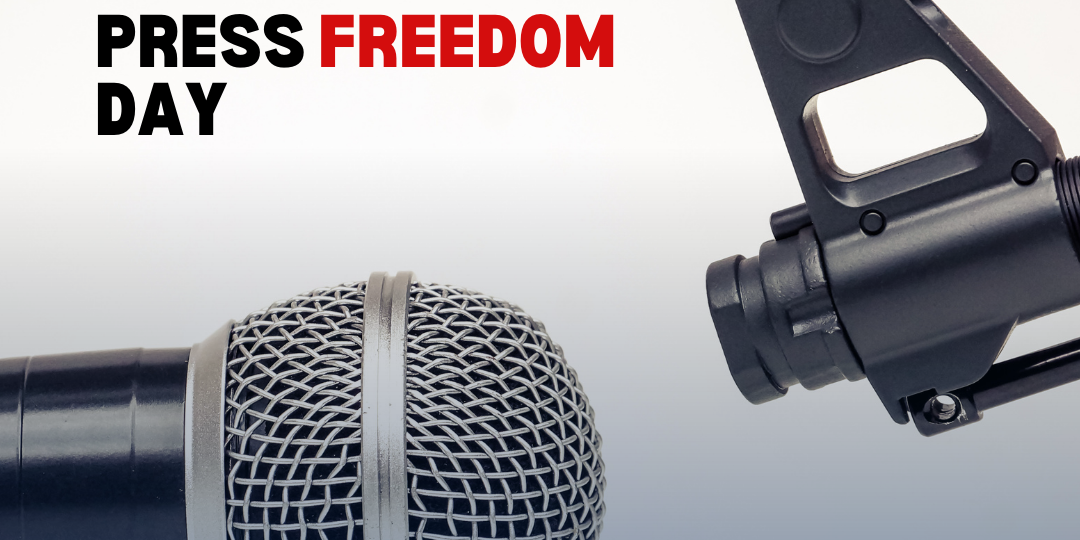
Journalism Under Siege: The Erosion of Press Freedom in IIOJK
Every year, the world marks World Press Freedom Day on May 3, 2026, proclaimed by the UN General Assembly in 1993, the plight of journalists in Indian illegally occupied Jammu and Kashmir remained largely overlooked. The territory remains one of the most dangerous and restricted places in the world for media professionals, where intimidation, surveillance, and the consistent threat of reprisals have become part of everyday journalistic work. Journalists in IIOJK, despite threats, continue to perform their duties. Reports leading up to May 3, 2026, indicate that press freedom in the territory has continued to decline, with independent journalism under severe pressure from the BJP-led governor rule. Since the revocation of the state’s special status in 2019, the state of journalism and journalists’ working conditions in IIOJK have deteriorated significantly.
According to a report compiled by Kashmir Media Service Editor Raies Ahmed Mir, “Journalists face summons, interrogation, and coercion, and are often asked to sign undertakings pledging not to publish content critical of the BJP government, ongoing atrocities, or political injustices following the illegal and military abrogation of Articles 370 and 35A.” He further stated that the BJP-led Indian government is using coercive measures to suppress the media in the disputed territory. Journalists have reportedly been questioned about their sources. Many journalists have also had their equipment confiscated by the authorities. Some are facing charges for social media posts or news reports considered “anti-national.” According to Amnesty International, authorities in IIOJK continue to target artists, academics and journalists through expanded censorship, weaponization of criminal laws and digital restrictions. After the Pahalgam attack, Indian authorities used sedition laws and the Unlawful Activities (Prevention) Act 1967 (UAPA) to arrest or file First Information Reports (FIRs) against journalists, academics and students who demanded accountability for the security lapse.
The Paris-based organization, Reporters Without Borders RSF, has released the 2026 World Press Freedom Index, in which India ranked 157 out of 180 countries, down six places from the previous year. Experts attribute this decline to increasing cases against journalists, threats, online harassment, and arrests. The laws frequently highlighted in this context are the provisions of the Public Safety Act, 1978 (PSA), which allows detention without charge for up to two years, and the Unlawful Activities (Prevention) Act, 1967 (UAPA), which allows up to 180 days’ detention to file a charge sheet after an arrest, double the standard time. It is notoriously difficult to secure bail under UAPA; if the court finds the allegations prima facie true, bail is denied. According to an article published by BBC in 2024, since the abolition of the state’s special status in 2019, at least five journalists have been convicted under the UAPA; three others have been detained under the stringent Public Safety Act (PSA). Journalists like Asif Sultan, Irfan Mehraj, Fahad Shah, Abdul Aala Fazili, and Sajjad Gul were arrested under these draconian laws.
When journalists face threats, their families and properties are not safe either. On 27 November, 2025, the Jammu Development Authority demolished the family home of journalist Arfaz Daing; the demolition came just after he had exposed an alleged cross-border drug trafficking involving a police officer. Asif Sultan, who was arrested in Feb 2022, was detained for 2,000 days upon his return home; he hardly spent five hours with his family before he was summoned to a local police station, where he was re-arrested. Sajad Gul, who was detained in January 2022 on charges of criminal conspiracy and granted bail after nine days, was soon detained again under the PSA. A similar pattern was seen in the case of Fahad Shah, who was arrested on February 4, 2022, under the UAPA, granted bail, and then arrested again. On November 23, 2023, Shah was released from jail on bail after the High Court of Jammu and Kashmir and Ladakh found that the authorities lacked sufficient evidence to charge him under UAPA; however, he continues to face charges to date.
Seven years after the constitutional changes of August 2019, journalists and media workers in IIOJK continue to operate under increasingly difficult circumstances. From harassment to unemployment to getting beaten up, journalists in Indian illegally occupied Jammu and Kashmir are going through the worst times. Reports also indicate that some journalists have been pressured to disclose confidential sources, this raise serious concerns about press independence and the protection of journalistic ethics; on February 8 2020, journalists Naseer Ganai and Haroon Nabi were summoned to the police counter-insurgency centre (Cargo) and were interrogated about the Jammu and Kashmir Liberation Front a banned organisation, which they had included in their news reports, they were asked to reveal the email ID from which they had obtained JKLF’s spokesperson’s statement. December 17, 2019, journalists Azaan Javaid and Anees Zargar were covering a protest in Srinagar when they were beaten up by the police, in full public glare. As reported by the International Press Institute, the Kashmir Press Club documented around 10 such incidents from August 5, 2020, until the beginning of March 2021. These repeated arrests suggest a systematic effort to intimidate and suppress critical voices.
World Press Freedom Day has passed, but the world paid very little attention to the matter; arbitrary detentions and weaponisation of laws like PSA and UAPA continue to restrict press freedom in the disputed territory, and journalists, since the abolition of Article 370, face threats and pressure to date. The latest press freedom rankings published by RSF, where India ranked 157th in press freedom out of 180 countries, further raise concerns about the state of media freedom and the conduct of authorities. Journalists like Asif Sultan, Irfan Mehraj, Fahad Shah, Abdul Aala Fazili, and Sajjad Gul have faced prosecution and protracted detention; these are only some of the most highlighted cases; many other independent reporters and journalists face the same repercussions for exercising their right to freedom of expression. This raises persistent concerns over the treatment of journalists in IIOJK and highlights violations of human rights and press freedom in the disputed territory.
About the Author: Asad Ur Rehman is a Junior Research Fellow at Youth Forum for Kashmir (YFK), where he contributes to research and analysis on issues related to Kashmir, human rights, regional security, and international affairs.
- Journalism Under Siege: The Erosion of Press Freedom in IIOJK - September 17, 2026
- Bo Vegas bonuses and promotions - September 10, 2026
- Comprehending the Appeal of Wow Las Vega Gambling Establishment Online - September 8, 2026