YFK working for peaceful resolution of Kashmir conflict, run by young activists from Kashmir, Pakistan and global supporters from several countries in Asia, Mideast, and Europe.
Killing Kashmiri Youth During Peaceful Protests

Killing Kashmiri Youth During Peaceful Protests

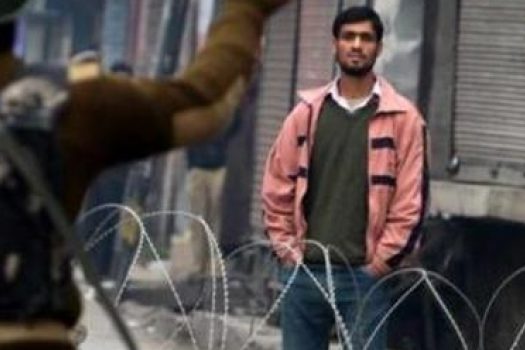
Unarmed Kashmiris who choose the option of peaceful protest to demand political rights face extra-judicial killings, illegal detentions and house arrests, gang rapes, student expulsions and beatings at Indian colleges, targeted killings of young men, and enforced disappearances by Indian occupation forces.
On 21st May 2015, 16-year-old Hamid Nazir Bhat casually took part in a peaceful protest against Indian military presence in Raipora Palhalan, District Baramula. The activity included sloganeering and carrying placards.

What was the Indian occupation police response?
Here is the report of The Hindu, one of India’s largest daily newspapers, posted on 25th May 2015, and titled, ‘Police Pellets Blind a Kashmir Teen’:

“Hamid Nazir Bhat, 16, has lost vision in his right eye pierced by pellets, and nearly a hundred of these tiny iron balls have pierced his skull, jaws, lips, nose, and brain. The police fired them during a protest in his village, Palhalan, in north Kashmir on Thursday.”

Read more
Impunity continues in Kashmir

Impunity Continues In Kashmir

The first six months of the year 2015 prove to be disastrous for the civil rights of nearly thirteen million Kashmiris living under Indian rule in Jammu and Kashmir. The territory remains at the center of an international dispute for the 67th year, with close to two dozen United Nations resolutions waiting implementation, and more than half-million Indian soldiers deployed in one of the most militarized zones in the world.
While awareness and civil rights improve worldwide thanks to education and technology, Kashmir is seeing backward march as India tries to dampen Kashmiri demands for freedom and end to military occupation. New Delhi’s choice methods to do are to restrict education options for young Kashmiris, and to impose censorship on electronic and social media.

Indian Prime Minister Narendra Modi is hailed as a business-friendly leader, though his country remains to stall opening up in trade negotiations with Europe, United States and China. He was elected in a one of the largest electoral exercises in the world, in terms of the overall number of voters in densely populated India. But this has not translated into more civil rights for Kashmiris who live under Indian control.

Read more